
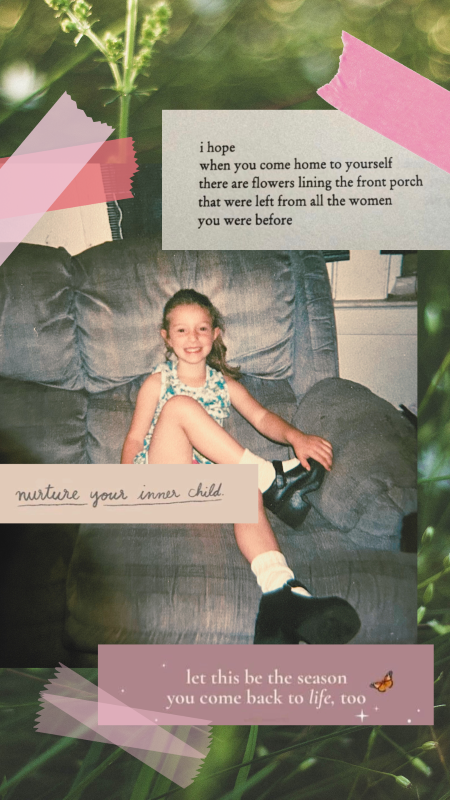
For a long time, I believed something was wrong with me, but I couldn’t explain what it was.
I was an anxious child. I never felt comfortable anywhere except at home. My body was always on alert, even when my mind didn’t understand why. I didn’t have language for it back then. I just knew that the world felt unsafe, and I carried that feeling everywhere I went.
What I didn’t know was that my brain was working overtime to protect me.
I was sexually abused as a child, but I didn’t consciously realize it until my early teen years. Even now, writing that sentence feels surreal. For years, the memories weren’t accessible to me in a clear, linear way. Instead, the trauma showed up as anxiety, hypervigilance, and a constant sense that something was “off.” My body remembered before my mind could.
There is a common misconception that trauma is always remembered vividly, like a movie playing on repeat. But for many survivors, especially children, the brain does something extraordinary. When an experience is too overwhelming, too confusing, or too dangerous to process, the brain can compartmentalize it. It can bury it. Not because it didn’t happen, but because remembering it at the time could have been even more harmful.
Children depend on adults for safety. When that safety is violated, the brain sometimes chooses survival over memory.
From a neuroscience perspective, trauma fundamentally changes how the brain processes and stores memory.
When a child experiences extreme threats, the brain shifts into survival mode. The amygdala, which detects danger, becomes highly activated, while the prefrontal cortex, the part of the brain responsible for reasoning, language, and making sense of events, goes offline. At the same time, the hippocampus, which helps form coherent, time ordered memories, can be disrupted by stress hormones like cortisol.
This means the brain may store traumatic experiences without words, without sequence, and without narrative.
Instead of being filed away as a typical memory, trauma can be encoded as such - body sensations, emotional states, fear responses, anxiety and hypervigilance.
This is why survivors often feel trauma long before they can remember it.
In children especially, dissociation, mentally distancing from overwhelming experiences, is a powerful protective mechanism. The brain may suppress conscious awareness of abuse because acknowledging it could increase danger, especially if the abuser is still present or holds power. The goal is not truth in the moment…the goal is survival.
As safety increases through distance, time, development, or the removal of the threat. The brain may allow awareness to surface. This is not the brain “creating” memories. It is the brain finally determining that remembering is no longer as dangerous as forgetting.
In my case, the realization didn’t fully surface until after my abuser died. That timing has haunted me and also taught me something profound. I believe my brain waited until it knew I was safe. Safe from retaliation. Safe from further harm. Safe enough to begin understanding what had happened.
That doesn’t mean the memories came back neatly or all at once. They didn’t. And they still don’t.
One of the hardest parts of being a survivor isn’t just what happened, it’s the constant internal questioning afterward.
Did it really happen?
Am I exaggerating?
Did I make this up?
Why can’t I remember everything clearly?
This battle inside my head has been relentless. There are days when I feel grounded in my truth, and days when self-doubt creeps in so quietly it almost feels logical. Trauma has a way of fracturing certainty. When memories are incomplete or fragmented, survivors often turn that uncertainty inward and blame themselves.
That self-doubt is not a failure. It is a trauma response.
For a long time, I thought validation had to come from others, someone to say, “Yes, this makes sense! Yes, what you experienced is real.” And while external validation matters deeply, I’ve learned that the hardest and most important validation is the one I give myself.
Believing myself has been harder than surviving.
The reality is this…my anxiety was real. My fear was real. My body’s responses were real. Trauma does not require perfect recall to be valid. The absence of memory does not mean the absence of harm. The brain does not hide experiences for no reason.
Survivors are often asked to prove what happened to them by memory, by detail, by consistency. But trauma doesn’t operate under those rules. It lives in the nervous system. It shows up in patterns, emotions, and survival strategies long before it ever forms words.
If you are a survivor who struggles with fragmented memories or self-doubt, you are not alone. If you question your own story, that does not mean it isn’t true. It means your brain did what it needed to do to keep you alive.
Healing for me has not been about forcing memories to surface. It has been about learning to trust myself and my reactions, my emotions, my lived experience. It has been about understanding that protection can look like forgetting, and remembering can come much later, when safety finally exists.
I am still learning how to validate myself. I am still unlearning the instinct to minimize my pain. But I am beginning to understand this…my survival is proof enough.
And if your brain protected you too by keeping parts of your story hidden until you were ready, there is nothing broken about you and there never was.